Lidding film is revolutionizing the way we package a wide range of foods, particularly fresh produce. Offering sustainability benefits, preserving shelf-quality and improving the consumer experience, lidding film offers brands numerous benefits. The great news is that those benefits extend far beyond fresh produce. Thanks to innovations in lidding film capabilities, brands with ready-to-eat meals, snack packs, bakery items and single-serve products can all capitalize on the opportunities lidding films offer.
Here are five emerging use cases for lidding films and why they’re so essential to consider if you sell products in these categories.
1. Premium Snack & Deli Kits: Better Protection for Mixed Products
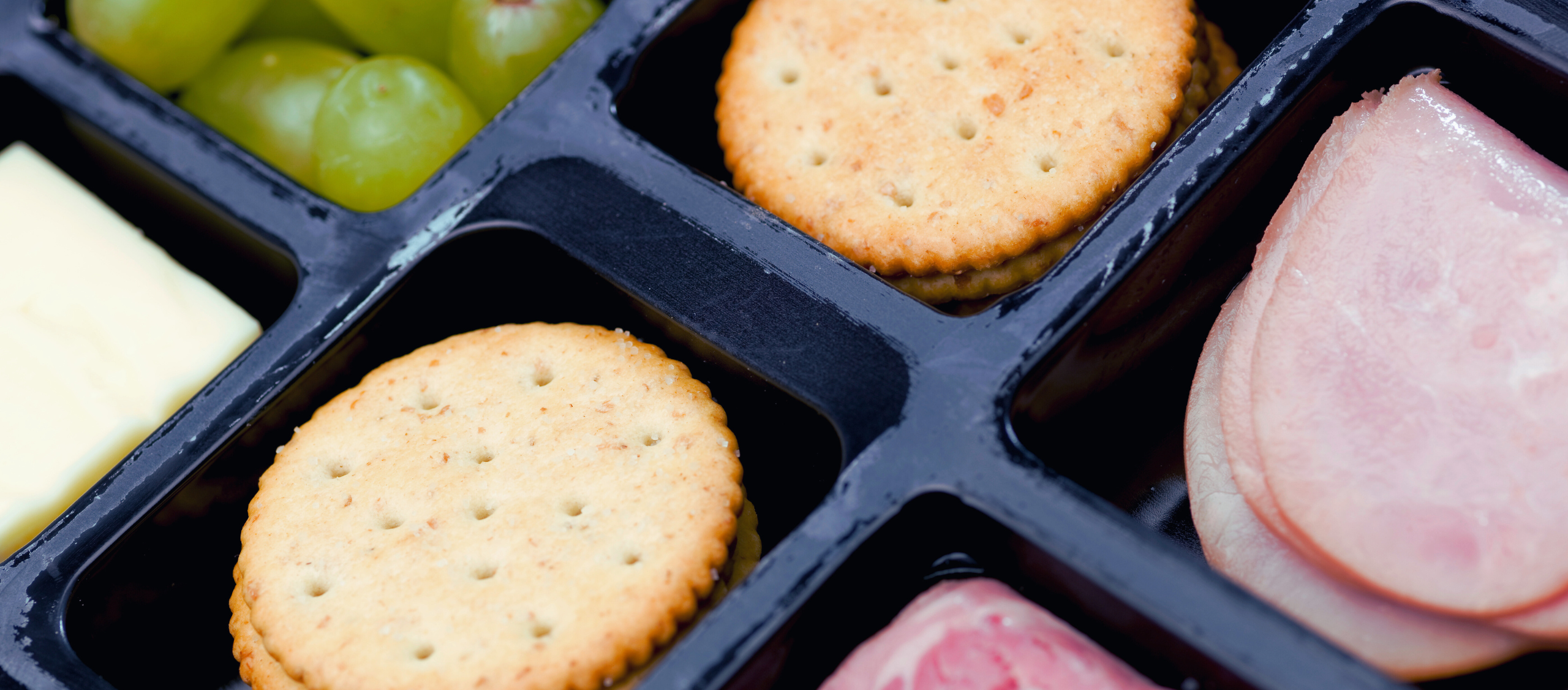
Today’s snack kits offer increasingly sophisticated combinations. Cheeses, meats, nuts, dips and fresh-cut produce are neatly arranged in trays, often with multiple compartments. This variety can make it challenging to preserve shelf quality — some ingredients require oxygen exposure, while others need a barrier to prevent it.
Overwraps, rigid lids and clamshells often fall short, meaning brands have to compromise on either shelf quality or ingredient variety.
Lidding film changes that. Belmark’s Sealutions™ films can be engineered with different conditions for each cavity in a snack kit tray using different levels of perforation. A cavity for produce may feature perforation, for example, while sections with crackers can remain sealed, keeping them crisp. This level of customization allows you to build new product combinations that weren’t possible before — and further differentiate your brand within your category.
Belmark’s patented camera system helps ensure that every perforation is the correct size and in the correct placement every time — in real-time. This system ensures consistent performance — and, potentially, reduced risk of obsolete packaging — without compromising speed or quality.
2. Bakery Items: Extending Freshness While Reducing Waste
Pastries, muffins, cinnamon rolls and other baked goods continue to come in familiar, but not necessarily the most effective, packaging: clamshells. Clamshells can be bulky, are not resealable and don’t provide a hermetic seal, which means shelf life depends entirely on how long the product stays fresh in open air.
This format can be frustrating for both consumers and retailers. Products can dry out quickly or get damaged during transport. Consumers also expect the ability to reseal and store baked goods over time, and without the hermetic seal, clamshells don’t extend shelf quality.
Peelable and resealable lidding films enable brands to deliver on consumer expectations. By sealing a tray with a resealable film, brands can extend freshness, improve consumer satisfaction and significantly reduce plastic. This format also helps retailers save on shelf space and merchandising while maintaining a clean, modern look.
While these solutions are relatively new to the bakery category, Belmark has already begun partnering with bakery brands to explore resealable trays for cookies and baked goods, combining visual appeal with a more functional format.
3. Ready-to-Eat Meals: Adding Even More Convenience to RTE Products
Ready-to-eat (RTE) meals foods like mac and cheese already provide consumers with a fast, convenient meal option. But, like other food categories, RTE packaging still includes a secondary, rigid lid that consumers have to open before the primary foil or plastic lid underneath it.
Lidding film offers a simpler and smoother solution. With printed, microwave-safe options now available, RTE brands can transition to a single-component seal that maintains shelf stability while providing clear preparation instructions and branding directly on the film.
Belmark’s microwaveable lidding films are designed for heat-and-eat convenience, helping brands reduce packaging materials and components while ensuring the seal can withstand microwave use. For consumers, that means more convenience: they won’t need to peel off multiple layers or heat meals in a secondary container. For brands, it means fewer materials (and costs) and faster production. It’s a win-win for both consumers and brands.
4. Single-Serve Breakfast Cups: Less Material, More Billboarding (and Convenience)
Convenient breakfast options like oatmeal, chia pudding and egg bakes are often packaged in single-serve cups with printed rigid lids. While these lids offer a strong billboard for branding, they also add costs, material and complexity for manufacturers. Many brands also use a dual-seal approach: a foil or film seal covered by a rigid plastic lid, which doubles the materials without necessarily improving the experience.
For consumers, the benefits of rigid lids (essentially, product protection) are unclear. Consumers usually discard the lid right away, while the product is still sealed beneath a secondary lid. By removing the extra lid, brands can simplify their packaging and cut plastic use by as much as 30–40%. This shift aligns with consumer expectations for sustainability while preserving the space needed for messaging and branding.
But does it work in practice? With products like Sealutions, yes. Belmark recently helped a breakfast brand remove its rigid lid entirely and switch to custom-printed film. The new format streamlined the brand’s production while maintaining its high-end appearance. It even helped improve consumer confidence with the updated look. Forward-looking brands like these can leverage lidding films not only for their functional benefits, but to differentiate themselves on-shelf.
5. Mushrooms: Consumer-Friendly Alternatives to Traditional Overwraps
Mushrooms have long been packaged in plastic (or increasingly, compostable) trays with an overwrap. This format is functional, but has limitations when it comes to shelf quality and the consumer experience. Mushrooms are living organisms and require oxygen to breathe, meaning packaging must allow for some air flow. But, too much exposure can reduce shelf quality, making it a difficult balance to protect the product and preserve its freshness.
Another consideration is that overwraps aren’t resealable, which makes storing a partially used product inconvenient and can lead to waste. For consumers who want ease and freshness and retailers seeking products that maintain shelf quality, lidding films offer a strong alternative to traditional mushroom packaging. That’s why some mushroom brands are shifting away from the legacy format and into peelable and resealable lidding films.
Lidding films like Sealutions feature micro or nano perforations to help maintain the optimal level of oxygen moving through the film, allowing mushrooms to breathe just the right amount. This precision supports better shelf quality. And, with resealable options, the consumer experience improves dramatically, reducing the chance of torn film and allowing for multiple uses.
The Best Lidding Film Suppliers Bring Together Precision, Service, and Innovation
Making the transition to lidding film successfully requires working with a supplier who understands your product and its properties, as well as your needs as a growing brand. Belmark supports you in everything from technical aspects, such as tray compatibility and seal performance, to operations and implementation.
Through our service-oriented approach, we partner with trusted tray and equipment vendors to ensure a smooth and production-ready transition. At Belmark, you’ll benefit from:
- Our team’s expertise in peelable and resealable lidding films
- Perforation capabilities to fit your product’s needs
- Patented in-line camera verification system for quality control
- Fast turnaround and short-run options
Our capabilities enable you to transition to lidding film efficiently and confidently.
Share This Story, Choose Your Platform!
Ready to get started?
Ready to get started?
Call 920.280.1282 or fill out this form and you’ll be in touch with a packaging expert in under 24 hours.
Call 920.280.1282 or fill out this form and you’ll be in touch with a packaging expert in under 24 hours.