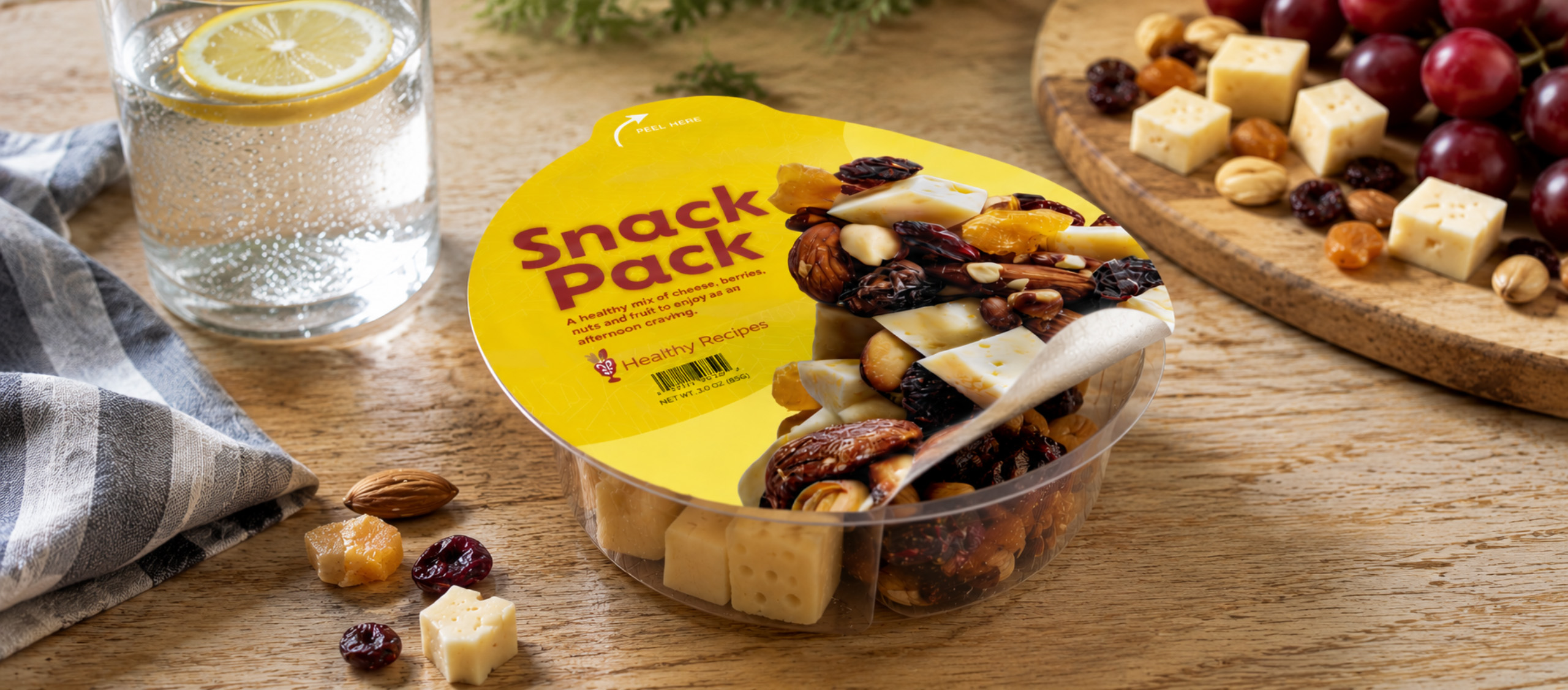
Consumer demand for convenience is growing. A third of the population has less than 30 minutes to prepare and consume meals, 77 percent say convenience drives their purchasing decisions, and the ready-to-eat market is projected to more than double by 2024. All this adds up to brands searching for more convenient ways to package their products, with many of them moving toward tray formats paired with lidding film. It’s a combination that protects shelf quality, showcases the product, and, when done well, makes life easier for consumers.
While these benefits may make the decision to opt for lidding film simple, finding the right supplier can be anything but. There are many nuances that come into play when it comes to optimizing film performance. It takes a partner who understands how these nuances shape everything from product presentation to consumer experience to develop a solution that unlocks brand growth in addition to packaging your product.
Start with the basics: know the jobs to be done.
Before evaluating a lidding film supplier, it helps to get clear on the full scope of what lidding film is being asked to do. A true partner knows there isn’t just one job to be done, but four.
Protect freshness and product integrity.
The film creates a barrier that protects against spoilage and leakage. In some applications, it must also maintain precise atmospheric conditions to ensure optimal freshness from warehouse to shelf to home.
Showcase product quality.
With high-clarity films and anti-fog features, shoppers are given a literal window into the freshness and quality of your product.
Support clean, easy opening and resealing.
Depending on how your product is used and portioned, easy-peel single-use film and resealable options that preserve freshness between servings shape your consumer experience.
Carry your brand on the shelf.
Printed lidding film turns the top of your packaging tray into usable real estate for brand storytelling and claims that can help your product stand out in the grocery aisle.
Evaluate the depth of their expertise and capabilities.
Not all lidding suppliers are built the same. Some are set up to simply move volume without taking into account the details of your product and business goals. Others have the technical range, production capabilities, and flexibility to function as a genuine packaging partner. The difference between a vendor connection and a partnership comes down to just a few criteria.
Technical depth across the package system.
Lidding film is one part of your package system. Make sure your partner has a range of experience across tray-based formats. They should be able to tailor a solution that complements your product, equipment, tray material, and compartment size, shape, and quantity while also delivering on your specific goals with options like sustainable materials and custom perforation.
Print capability and consistency.
In store, your packaging is a critical opportunity to connect with shoppers and start to build brand loyalty. Your packaging partner needs to deliver accurate color matching and clean, consistent print quality to position your product well.
Flexibility across run sizes.
Brands rarely launch at full production volume. A strategic partner can support early stage, lower-volume runs and scale with you as your product gains traction. Starting with a supplier who can deliver reliable performance for a single store pilot to national distribution eliminates risk, friction, and issues down the road.
Discuss how they’ll approach your product.
Once you know they have the technical chops you need, you’ll want to understand how they’ll apply their expertise to your product, its properties, and the category it lives in. A thoughtful partner will bring the full context to the conversation early, ensuring the solution keeps your product fresh and the integrity of your brand intact.
Ready-to-eat snacks and meals often contain a combination of goods with different requirements. Cheeses are packaged alongside crackers. Dips and fresh cut produce are arranged together. Nuts and dried fruits commingle. Designed for on-the-go use, the seal must also be easy to open but hold tight when tossed in a lunch bag or hiking pack.
Fresh produce requires lidding film that’s engineered to manage oxygen levels as the products breathe after harvest. Getting the material and perforation pattern right requires genuine expertise and an understanding of the specific product, harvest timing, and growing conditions.
Pet food in tray formats signal premium quality to pet owners seeking fresh, refrigerated options. Lidding film in this category has to be delivered with the same level of care as human food packaging. And many brands in this space are winning additional points from pet parents when they opt for sustainable materials.
A partner who has worked across and understands a wide range of categories can bring insight and discernment to your packaging conversations. Not just materials that tick a box.
Build a partnership.
Lidding film decisions trickle down to shelf life, brand presentation, production, efficiency, and all the way to customer experience. That’s a lot riding on what can appear to be a routine procurement decision.
The right supplier will work with you as a strategic partner, bringing technical expertise, reliability, flexibility, and category experience to your solution. More than protecting your product, they’ll be invested in the role your packaging plays in connecting with consumers and growing your business.
Share This Story, Choose Your Platform!
Ready to get started?
Ready to get started?
Call 920.280.1282 or fill out this form and you’ll be in touch with a packaging expert in under 24 hours.
Call 920.280.1282 or fill out this form and you’ll be in touch with a packaging expert in under 24 hours.