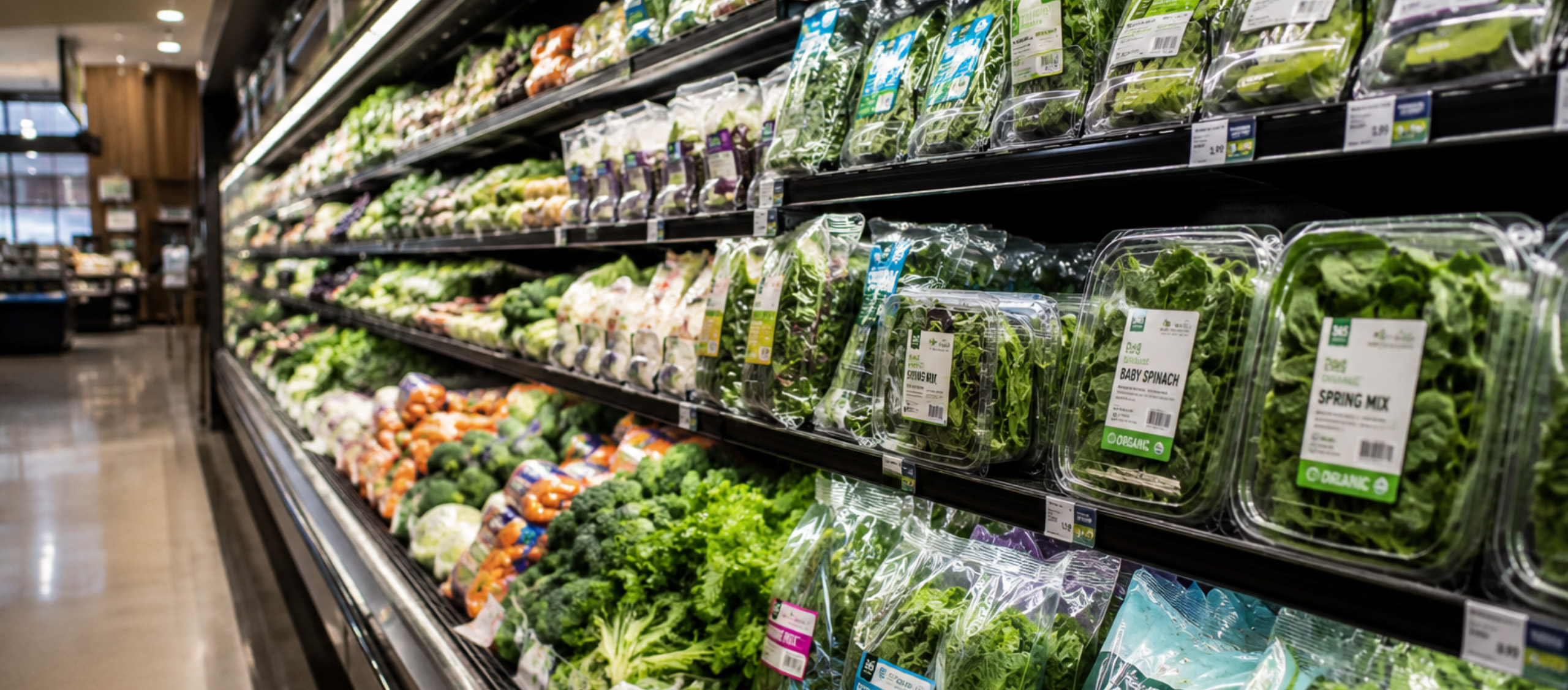
At a base level, sustainable packaging has one goal to achieve: reduce environmental impact. It sounds simple enough, but when it comes to produce, things become more complicated. One goal becomes many. The switch to recyclable produce packaging, recycled materials, or other options has an impact on moisture management, respiration, shelf presence, and consumer experience.
Jumping into an environmentally responsible structure without giving consideration to the broader demands of the produce aisle can undercut retailer confidence and sales. Knowing your options and how each is designed for fresh produce can help avoid missteps and make for a smooth and successful transition to packaging that supports your climate responsibility goals.
The language of sustainability.
Though often used as a catch-all phrase, “sustainable packaging” isn’t one thing.
It covers a range of approaches that solve different problems, appeal to different audiences, and perform in different ways depending on the product and environment.
“The biggest misconception we run into is that ‘sustainable’ is a single category. It’s not. Getting clear on your options and which one fits your goals is where the real conversation starts.” — John G., Technical Service Engineer at Belmark
Recyclable materials are designed for the recycling stream, making it easy for consumers to be part of the solution and help reduce landfill waste.
Post consumer recycled (PCR) solutions use materials that have already been through the recycling process, reincorporating them into new packaging. This approach reduces dependence on virgin plastics and takes the burden off the consumer.
Responsibly sourced raw materials shift the focus upstream. For produce brands, this may include leveraging Forest Stewardship Council® (FSC) sourcing for pressure sensitive labels.
Compostable materials are often part of sustainable packaging conversations, but they come with caveats. The biggest of which is that only one percent of U.S. households have access to drop-off composting programs that accept packaging while 73 percent of households have access to recycling.
The matter of performance in the produce aisle.
Understanding your options is just the first step in making the move to environmentally friendly packaging. The next, and arguably the most important, is contextualizing those options within the produce aisle. Fresh fruits, vegetables, and herbs are biologically active after harvest. This makes the produce section one of the more technically demanding environments for your packaging.
An eco-friendly packaging structure that works well for dry goods, may not be the right fit for cut salad greens or freshly harvested berries. For these products and others in the produce category, the packaging must:
- Manage respiration and moisture transmission to prevent condensation, fogging, and premature spoiling.
- Perform consistently in cold chain conditions, maintaining a tight seal despite temperature swings, humidity changes, and physical handling.
- Communicate quality and freshness with consistent printing and clear visibility that showcases the product at its best.
All of these requirements must be layered onto your sustainability strategy. The good news is recyclable, recycled, and responsibly sourced materials have all advanced to the point where they can match the performance of conventional options. This allows you to shift the conversation to your sustainability goals so you can zero in on the path that aligns with the priorities of your brand, consumer, and retail partners.
Two directions, one decision.
Belmark has simplified the sustainable packaging conversation into two distinct entry points. Each delivers on your environmental responsibility story from different angles.
How the packaging is used: eco-READY™.
Engineered to allow consumers to recycle the packaging after use, eco-READY materials can carry the How2Recycle® label. This label is a standardized, third-party designation that gives consumers a clear understanding about end-of-life disposal. Recyclable produce packaging signals your commitment to the environment while inviting consumers to play an active role in upholding that commitment.
How the packaging is made: tru-IMPACT®.
These solutions incorporate recycled plastic content or responsibly sourced materials, reducing material waste and, subsequently, your environmental footprint as part of the manufacturing process. For brands whose goals center on reducing virgin plastic consumption and keeping materials in circulation, this approach is a strong option.
“eco-READY and tru-IMPACT aren’t competing options. They simply address different goals. One is about end-of-life recyclability. The other is about what goes into the structure from the start. Most brands don’t walk in knowing which problem they’re actually trying to solve. That’s what we’re here for.” — John G., Technical Service Engineer at Belmark
Preparing for the sustainable packaging conversation.
Even now that you’re informed about the many ways to incorporate eco-friendly materials into your produce packaging strategy, you don’t have to have all the answers. As your packaging partner, the Belmark team can guide you to the solution that’s right for you and your product. To help us get there together, it can be helpful for you to give some thought to:
- Your product format and storage environment. Fresh-cut versus whole product, tray-lidded versus stand-up pouch, refrigerated versus ambient display. These details shape which options are viable and which aren’t.
- Who your key retail partners are. Different retailers have different requirements and sometimes explicit packaging guidelines. Knowing the channel helps narrow the direction quickly.
- Current packaging pain points. Seal failures, fogging, inconsistent run quality, supplier reliability issues. Being aware of what issues you’re contending with will help us solve them.
- Your distinctive sustainability goals. A How2Recycle® designation. Reduced virgin plastic content. A retailer request. A corporate commitment. Each one points toward a different starting point.
- Where you are today and where you want to be. The first sustainable SKU is a starting point not a finish line. Knowing whether you’re planning to expand to two SKUs or twenty shapes our approach, so we can support your strategy as you grow.
With all these considerations in mind, the team at Belmark can engineer a solution that meets the performance demands of fresh produce while also upholding the near and long-term sustainability goals of your brand.
Share This Story, Choose Your Platform!
Ready to get started?
Ready to get started?
Call 920.280.1282 or fill out this form and you’ll be in touch with a packaging expert in under 24 hours.
Call 920.280.1282 or fill out this form and you’ll be in touch with a packaging expert in under 24 hours.