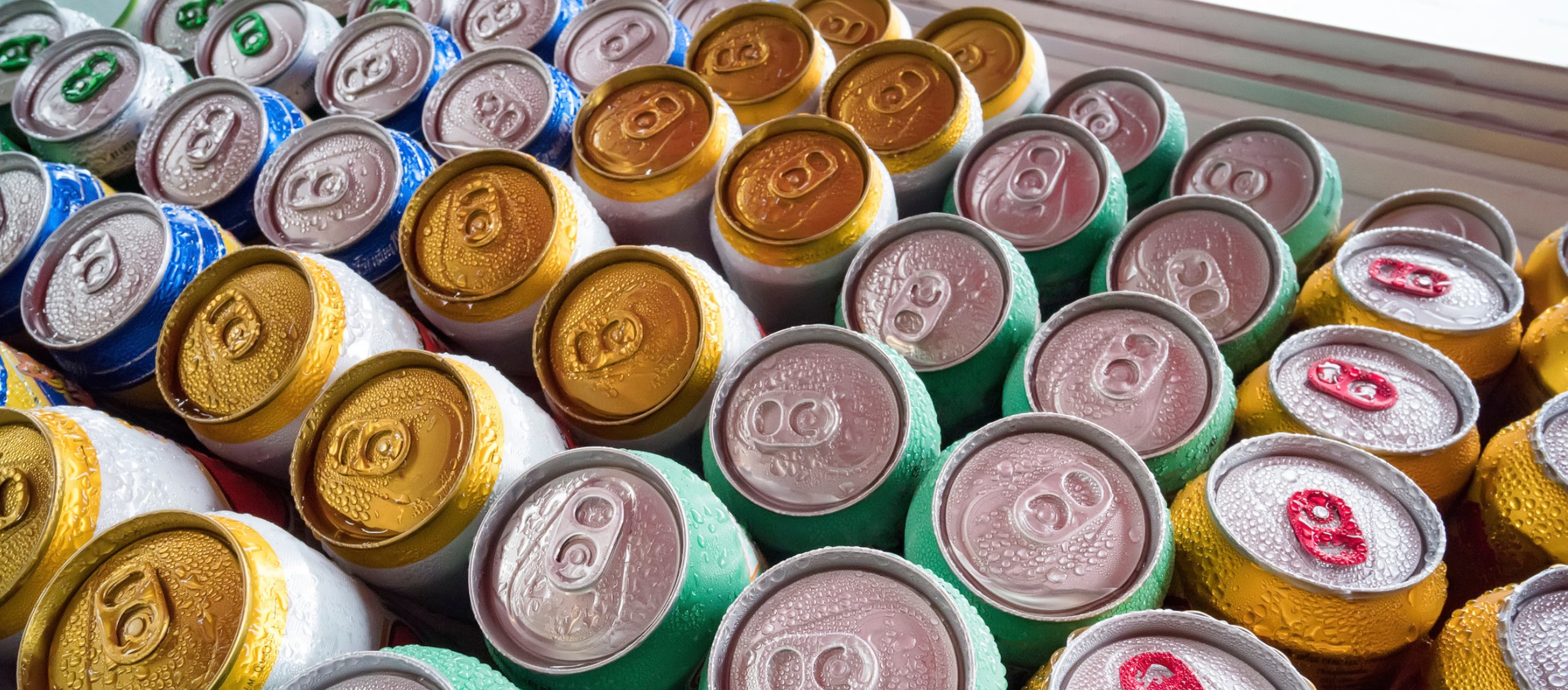
Most canned beverage brands start with the question, “What should our can look like?” The question that ends up shaping the next two years is a different one: “How many cans do we have to commit to before we know this flavor will sell?”
There are three common ways to put your brand on an aluminum can. You can order cans printed by the can manufacturer, or you can start with blank cans and decorate them with either a shrink sleeve or pressure sensitive labels. All three can look great in a cooler. Where they really differ is how much inventory they ask you to carry, how quickly you can change your artwork, and how easily they flex as your lineup grows.
Why is the can decoration choice really an inventory decision?
Printed cans usually come with large minimum orders set by the can manufacturer, and those minimums are often counted in truckloads. That works well for a flagship flavor that moves at a steady pace. It gets harder with a seasonal, a collab, or a flavor you’re still testing, because every can that doesn’t get filled sits in a warehouse with that artwork already printed on it.
Decorating blank cans flips that around. You stock one plain can and add your brand when the cans are labeled or sleeved, so a single can inventory can cover every flavor in your lineup. When a flavor takes off, you order more labels. When one doesn’t, you stop, and you aren’t left holding pallets of cans you can’t use.
Belmark has no order minimums on pressure sensitive labels or shrink sleeves, and our speed-to-market means a new flavor can go from approved artwork to the canning line without waiting on a full can production run. What are the options for decorating a beverage can?
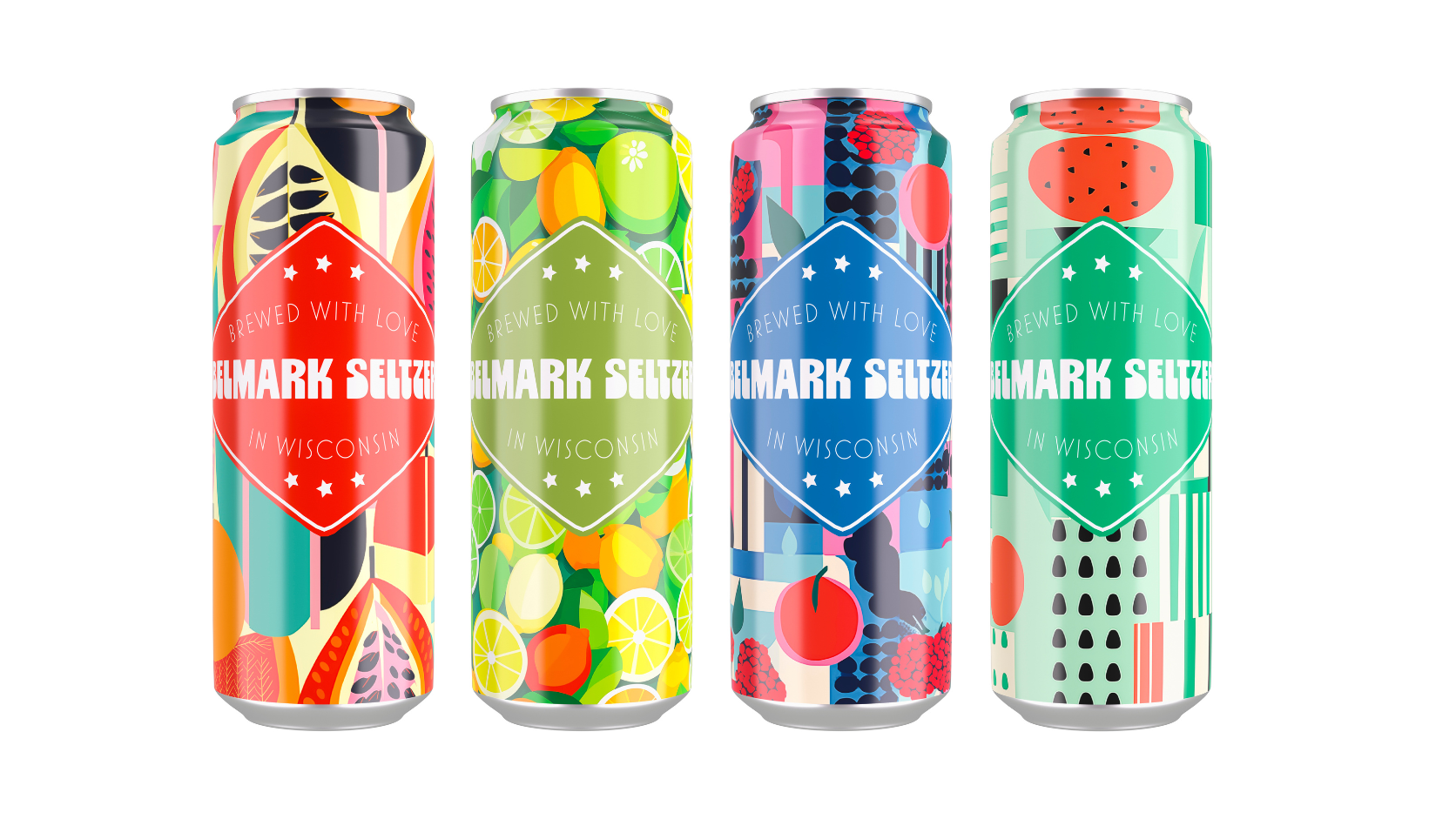
Printed cans
The can manufacturer prints your artwork directly onto the aluminum, so the design is part of the can itself. It’s a clean look that suits high-volume, core SKUs with artwork you don’t plan to touch for a while. Keep in mind that changing anything, even a small claim on the side panel, means a new print run on the can maker’s schedule.
Shrink sleeves on blank cans
A printed film sleeve shrinks to fit the can and covers nearly the whole body, so you get the full-wrap look of a printed can without the same up-front commitment. Sleeves are a strong fit when you want a new flavor to sit next to a national brand in the cooler and look just as finished. Many co-packers and mobile canners can apply them, though it’s worth confirming before you lock in your timeline.
Pressure sensitive labels on blank cans
Pressure sensitive labels wrap around the body of the can and leave a band of bare aluminum at the top and bottom, which a lot of brands have turned into part of their look. They’re usually the quickest way to get a new flavor from approved artwork to a filled can, and most small canning lines and mobile canners already have a way to apply them. That makes them a natural fit for limited releases, taproom-only drops, sampling events, and anything you want on shelf before the season is over.
Do you have to choose one format for your whole line?
No, and most growing beverage brands don’t. The better approach is to match the format to how each SKU behaves.
Picture a sparkling water brand with three year-round flavors and a fourth slot that rotates every quarter. The three core flavors sell at a predictable pace, so printed cans or shrink sleeves make sense for them. The rotating flavor changes four times a year, so pressure sensitive labels let the brand swap it out without carrying cans for a flavor that’s already off the menu. A retailer asks for an exclusive? That runs on labels too, and it can be in the cooler while the opportunity is still on the table.
That tiered setup also makes it easier to graduate a flavor. A seasonal that keeps selling out can move from labels to sleeves, and eventually to printed cans if the volume supports it, without changing how customers recognize it on shelf.
What happens to the can after it’s filled?
Aluminum chills fast, which is great for your customer and a real test for your packaging. A cold can starts sweating the moment it leaves the cooler, and cans rub against each other on the filling line, in multipack carriers, and at the bottom of an ice-filled tub at the tailgate.
The details of your process matter here, so share them with your packaging partner early. Does your beverage go through pasteurization after filling? Are your cans labeled before or after they’re filled? Will they spend most of their life in a grocery cooler or in a bucket of ice at a festival? Those answers point to the right materials for your labels or sleeves, so the can that reaches your customer looks the same as the one you approved. If you’re leaning toward pressure sensitive labels, we cover how they’re built to hold up on cold, wet containers here.
Where does secondary packaging fit in?
Your can is rarely the only thing a shopper sees. Four-packs, twelve-packs, and variety packs usually live in a folding carton, and that carton is often the first thing someone notices from the end of the aisle.
Working with one packaging partner for your cans and your cartons makes it much easier to keep color consistent across both, so your brand looks the same on the can in someone’s hand and on the box on the shelf. Belmark produces pressure sensitive labels, flexible packaging, and folding cartons, so you can build out your full lineup with the same team behind it.
Printed cans vs. shrink sleeves vs. pressure sensitive labels at a glance
Here’s how the three options compare on the factors that matter most for a canned beverage lineup.
| Printed Cans | Shrink Sleeves | Pressure Sensitive Label | |
|---|---|---|---|
| Best Fit | High-volume core flavors with stable artwork | Core and seasonal flavors that need a full-wrap look | New flavors, limited releases, exclusives, and events |
| Order Commitment | Large minimums set by the can manufacturer | No order minimums with Belmark | No order minimums with Belmark |
| Changing Artwork | New can print run required | New sleeve run on blank cans | New label run on blank cans |
| Coverage | Full can | Nearly full can body | Can body, with bare aluminum at top and bottom |
| Application | Printed before the can reaches you | Sleeve application plus heat | Label applicator, from small lines to mobile canners |
| Can Inventory | One can per flavor | One blank can for every flavor | One blank can for every flavor |
Frequently asked questions about canned beverage packaging
Build a can strategy that keeps up with your lineup.
The right setup for your canned beverage depends on what you’re selling now and what you’re planning to launch next. If you’re weighing printed cans against blank cans, or trying to figure out which flavors belong in which tier, a packaging expert can help you sort through it, and we’ll stay with you through every reorder and every new flavor after that. Talk to a packaging expert to get started.
Share This Story, Choose Your Platform!
Ready to get started?
Ready to get started?
Call 920.280.1282 or fill out this form and you’ll be in touch with a packaging expert in under 24 hours.
Call 920.280.1282 or fill out this form and you’ll be in touch with a packaging expert in under 24 hours.