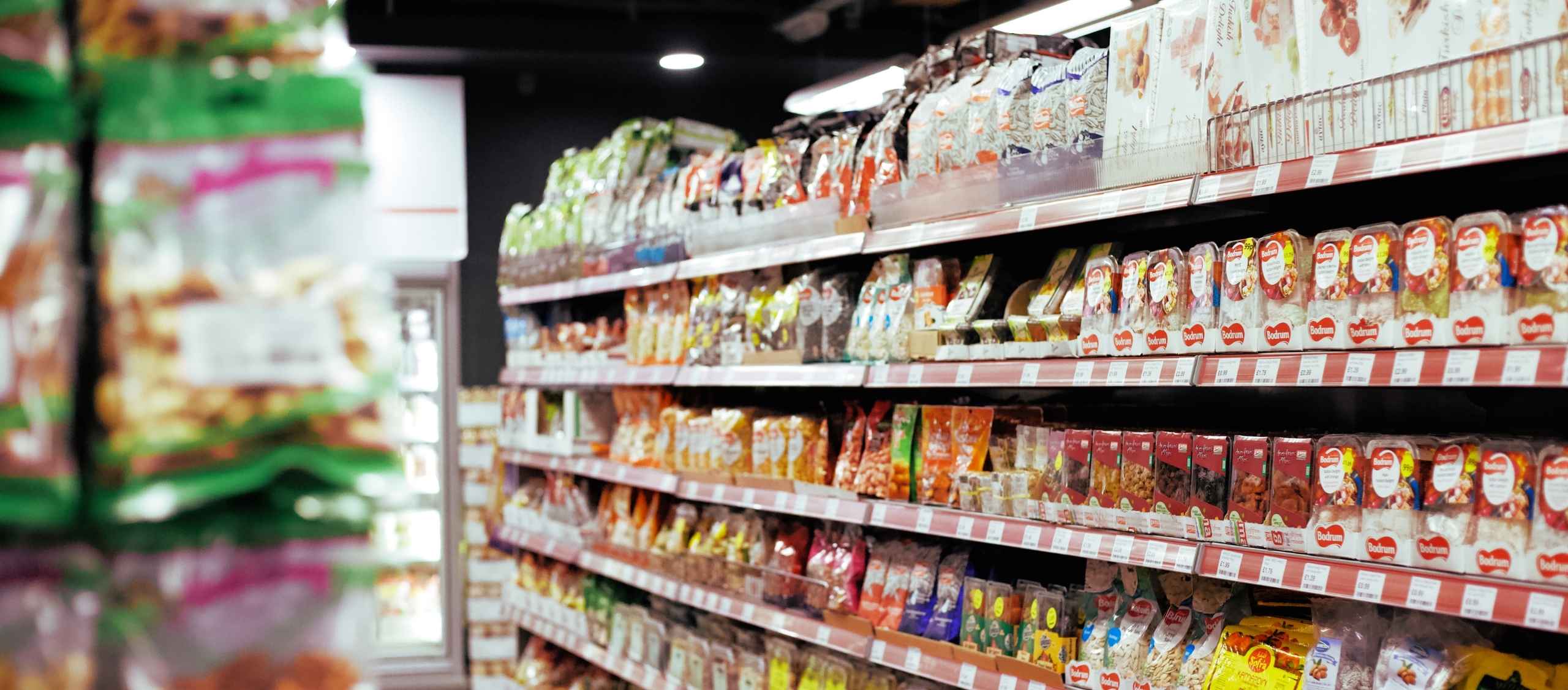
If you pay attention as much as we do, you’re likely noticing some shifts in the grocery aisles. More and more brands are popping up in unexpected places in response to consumer behaviors and trends that represent new avenues for growth. Maybe you’re seeing your favorite coffee brand in the refrigerator case with cold brews that meet the demands of Gen Z consumers. Others are building on their position as an ingredient by bringing completed recipes right to the shelf.
These innovative product lines are all part of a CPG retail strategy known as aisle hopping. It’s one many established brands are leveraging to keep up as emerging brands claim a 40% share of growth despite their relatively small market presence.
Defining aisle hopping.
More than a simple line extension in the form of a new flavor or package size, aisle hopping is an expansion that moves into an entirely new product category. Often this means reaching a different audience with different needs, introducing your trusted brand to new shoppers or existing consumers in new ways.
Why are we seeing more CPG brand expansion?
There are several factors driving the adoption of aisle hopping strategies:
Saturated markets push brands toward wide open pastures.
When growth stalls out in a category flooded with competition, smart brands don’t fight harder to claim more of the same market slice. Instead, they go out in search of a new slice. Established companies are being strategic about which slice they pursue, building upon hard-won brand equity to capture white space in adjacent or complementary categories.
Brand loyalty isn’t what it once was.
Though brand equity can better position companies as they aisle hop, we are seeing more and more consumers being open to exploring new brands. A third of shoppers are trying different brands. What’s more, 60% believe private brands offer equal or better quality. This shift may impact owned market share, but it also presents opportunities in other categories. With more people willing to try different products, brands have a better chance of inviting trial in new aisles.
The social influence.
Consumers are being introduced to new products at an unprecedented rate and social media is a major driver of their experimentation. It’s become the primary source of brand discovery especially among Gen Z with 77% using TikTok to find new products.
Even beyond influencing shoppers, social media has been known to create new categories seemingly overnight. Consider the mushroom coffee phenomenon. When functional wellness surged in popularity, brands began creating products that now live somewhere between the coffee aisle and supplements section. Each emerging social media trend represents a potential opportunity for category expansion.
Set your packaging strategy up for a successful leap.
When hopping across aisles, your packaging must do a lot of the heavy lifting. There are decisions to be made and paths to choose. Each will shape the way you show up in your new category, connect with new audiences, and maintain loyalty among established customers.
Two paths to the new aisle.
Brands typically take one of two approaches when expanding into new categories. The first emphasizes brand consistency. With this approach, you’ll want to maintain a strong visual and tactile connection to your core identity to make the most of your existing brand equity.
If opting for a fresh start in your new category, packaging should follow suit with a look that’s optimized for your new audience and competition while bringing loyal shoppers along with thoughtful nods to the parent brand.
The question of format.
When you’re expanding across categories, you’ll likely need to explore a different packaging format. Each comes with a unique set of considerations that impacts product, brand, and shelf presence.
Product demands: Barrier properties, shelf-life requirements, and temperature resistance all shift based on the type of products you’re bringing to market. And subsequently, so does your material selection.
Brand experience: If your goal is to trade on brand equity in the new aisle, consistency across formats is critical. But you also must give consideration to how your brand experience may need to adapt to the new category. Maybe you’re flexing into a more premium space and need the packaging to read as luxury. Or perhaps a move to the organic aisle means recyclability is a larger consideration.
Shelf presence: Different categories have different shelf dynamics. Your packaging must compete against a whole new suite of products while also staying within the parameters of retailer requirements. This may mean moving from folding cartons to flexible packaging or maybe pressure sensitive labels give you the category flexibility you need.
Getting it right with minimal risk.
When jumping to a new aisle, speed and flexibility are paramount, which is where rapid prototyping and low-volume production come in. With these tools in your packaging arsenal, you can learn fast, make tweaks, and hit the shelf quickly to claim your space among emerging trends and categories. With help from a strategic packaging partner, brands can easily pivot in the early stages of aisle hopping and then scale as they gain traction in their new category.
The secret to CPG growth lies across categories.
As the global CPG market is set to see $1.47 trillion in growth over the next five years, even thriving brands will find more and more opportunities outside their existing territories. Seizing these opportunities will require an innovation mindset that allows them to create new value and meet customers in unexpected ways. Those bold enough to explore opportunity in new aisles are set up to claim a larger slice of the market growth for themselves.
Share This Story, Choose Your Platform!
Ready to get started?
Ready to get started?
Call 920.280.1282 or fill out this form and you’ll be in touch with a packaging expert in under 24 hours.
Call 920.280.1282 or fill out this form and you’ll be in touch with a packaging expert in under 24 hours.