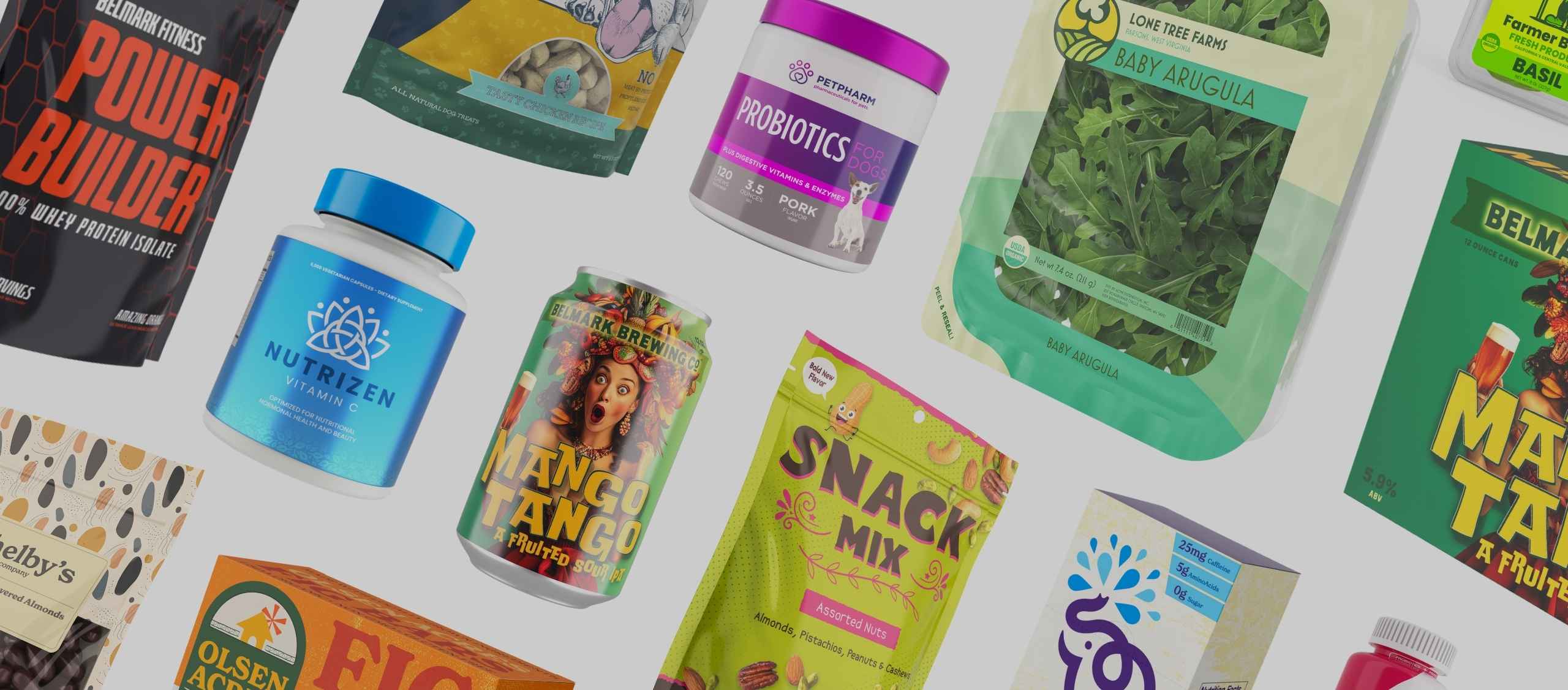
You’ve poured everything into perfecting your product. The formula is dialed in. The taste, the quality, the effectiveness — it’s all there. But here’s the reality: if your packaging doesn’t make someone want to pick it up and purchase it, your hard work won’t pay off when it truly counts.
Let’s take a look at shopping behavior. Studies show 56% of shoppers that hold a product in a category will buy a product in that category. The number increases to 62% if more than one product is touched. That’s not a small bump — that’s the difference between building a loyal customer base and watching shoppers walk past your product to reach for a competitor’s.
Custom packaging isn’t just about wrapping your product. It’s about creating that crucial first impression, telling your brand story at a glance, and giving consumers a reason to choose you in a crowded marketplace.
Why Custom Packaging Is Your Competitive Advantage
We judge books by their covers. It’s human nature. When a customer walks down an aisle or scrolls through products online, they’re making purchasing decisions based on what catches their eye. Your packaging is often the first — and sometimes only — chance to communicate who you are as a brand.
This is especially true for growing Consumer Packaged Goods (CPG) brands, private label products, and startups trying to compete with established names. You might not have the marketing budget of major brands, but you can absolutely stand shoulder-to-shoulder with them on the shelf when your custom product packaging is done right.
Think about natural and organic products. If your brand values authenticity and sustainability, your packaging design should reflect that through earthy tones, natural textures, or minimalist aesthetics. If you’re positioning as premium, details like soft-touch finishes, metallic inks, or unique structural elements signal quality before a customer even opens the package.
Private label brands offer a compelling example of how packaging shapes perception and competitive positioning. According to NIQ’s 2025 research, 75% of consumers now view private label products as strong alternatives to national brands and nearly half say they’re buying more store brands than ever before. This shift isn’t just about price — it’s about packaging that signals quality and legitimacy. Today, retailers like Trader Joe’s, Costco’s Kirkland Signature, and Target’s Good & Gather use sophisticated packaging design including premium finishes, thoughtful typography and vibrant colors to compete directly with established CPG brands.
But that also creates a new challenge: how do you stand out when everyone has access to similar packaging formats and quality?
The answer lies in the details. Color psychology. Material choices. Finishing techniques. The way your packaging opens and reseals. These elements work together to differentiate your brand and create an experience that feels distinctly yours.
Custom Packaging Myths That Hold Brands Back
One of the biggest misconceptions about custom packaging is that it’s prohibitively expensive or requires massive order quantities that small and growing brands can’t manage.
That used to be true. But like many other industries, packaging technology has evolved significantly. Today, brands can access custom printed packaging, premium finishes, and specialized features without holding inventory and risking obsolete packaging. The key is working with a packaging partner who can match you with the right solution for your current stage of growth.
Another misconception? That you need to know every spec and technical detail before reaching out to a packaging supplier. A good packaging partner will guide you through material options, structural considerations, and translating your design to print — meeting you where you are in your journey, whether you’re launching your first product or scaling to regional or national distribution.
Packaging shouldn’t be an obstacle to entry. It should be a tool that helps you grow.
Three Ways to Elevate Your Packaging (Without Starting Over)
If you’re thinking about upgrading your branded packaging, you don’t necessarily need a complete overhaul. Here are three suggested approaches:
1. Enhance with Premium Features. Simple additions can make a significant visual impact. Soft-touch coatings create a tactile experience that suggests quality. Metallic material catch light and draw the eye. Spot gloss or matte finishes add depth and sophistication. These features, which were once premium upcharges, are now within reach for many brands and can transform how your product is perceived on shelf.
2. Shift Your Packaging Format. Sometimes the biggest elevation comes from expanding the type of packaging you use. A brand using pouches might benefit from folding cartons that provide more surface area for storytelling. The right format depends on your product, your market, and where you want to take your brand.
3. Integrate Sustainability as a Standard. According to Shorr’s 2025 Sustainable Packaging Consumer Report, 54% of respondents reported choosing products with sustainable packaging in the past six months. Additionally, 90% said they are more likely to purchase from a brand or retailer if its packaging is eco-friendly. Today’s consumers expect sustainability — it’s a baseline, not a premium. While there is unfortunately no magic solution that makes packaging disappear without environmental impact, there are responsible options. For example, PCR content from recycled materials like milk jugs, recyclable films that work with local infrastructure, and material reduction strategies that use only what’s necessary. The key is working with a partner who’s transparent about what’s genuinely achievable and won’t greenwash claims that erode trust.
What to Look for in a Packaging Partner
Not all packaging suppliers operate the same way. The beauty of modern custom packaging is flexibility — you’re not locked into one approach forever. Maybe you start with pressure sensitive labels as you test the market, then transition to printed flexible packaging as your volume grows. If you’re expanding product lines, you’ll want packaging that maintains brand consistency while allowing each SKU to stand out.
Here’s what sets the right packaging partner apart:
- Flexibility to grow with you. A partner who can handle labels, flexible packaging, and folding cartons gives you room to evolve. You’re not starting over with a new supplier every time your needs change — you’re working with a team that understands your brand and can scale solutions as you grow.
- An easy entry point. Others offer small-run capabilities that let you order what you need when you need it, rather than committing to inventory levels that strain cash flow.
- A dedicated team, not a call center. You should have a sales representative who understands your business growth goals, an engineer who understands the technical requirements of your product, and an estimator who can help you make smart decisions. . When you’re transitioning from the local farmer’s market to your local grocery stores, these relationships will feel like your packaging partner has your best interest at heart to succeed.
- Transparency about capabilities and limitations. If something doesn’t exist or won’t work for your application, you deserve to know that upfront. No overpromising — just honest guidance.
- Technology diversity. Multiple printing technologies and production methods give you options that fit your current volume and budget while leaving room to scale.
- Design support. A good partner will prepare your artwork for production, ensuring your design translates accurately across different printing technologies and packaging materials so the final package matches your vision.
- Quality processes that protect your brand. Proofing processes that ensure your color is exactly how you want it before production and color management across different substrates and technologies ensure your brand looks consistent regardless of which packaging format you choose.
The relationships you build, the design assets you develop, and the production knowledge you gain all compound over time when you have consistency and continuity in your packaging partnership. That’s why choosing the right partner from the start matters more than most founders realize.
Share This Story, Choose Your Platform!
Ready to get started?
Ready to get started?
Call 920.280.1282 or fill out this form and you’ll be in touch with a packaging expert in under 24 hours.
Call 920.280.1282 or fill out this form and you’ll be in touch with a packaging expert in under 24 hours.