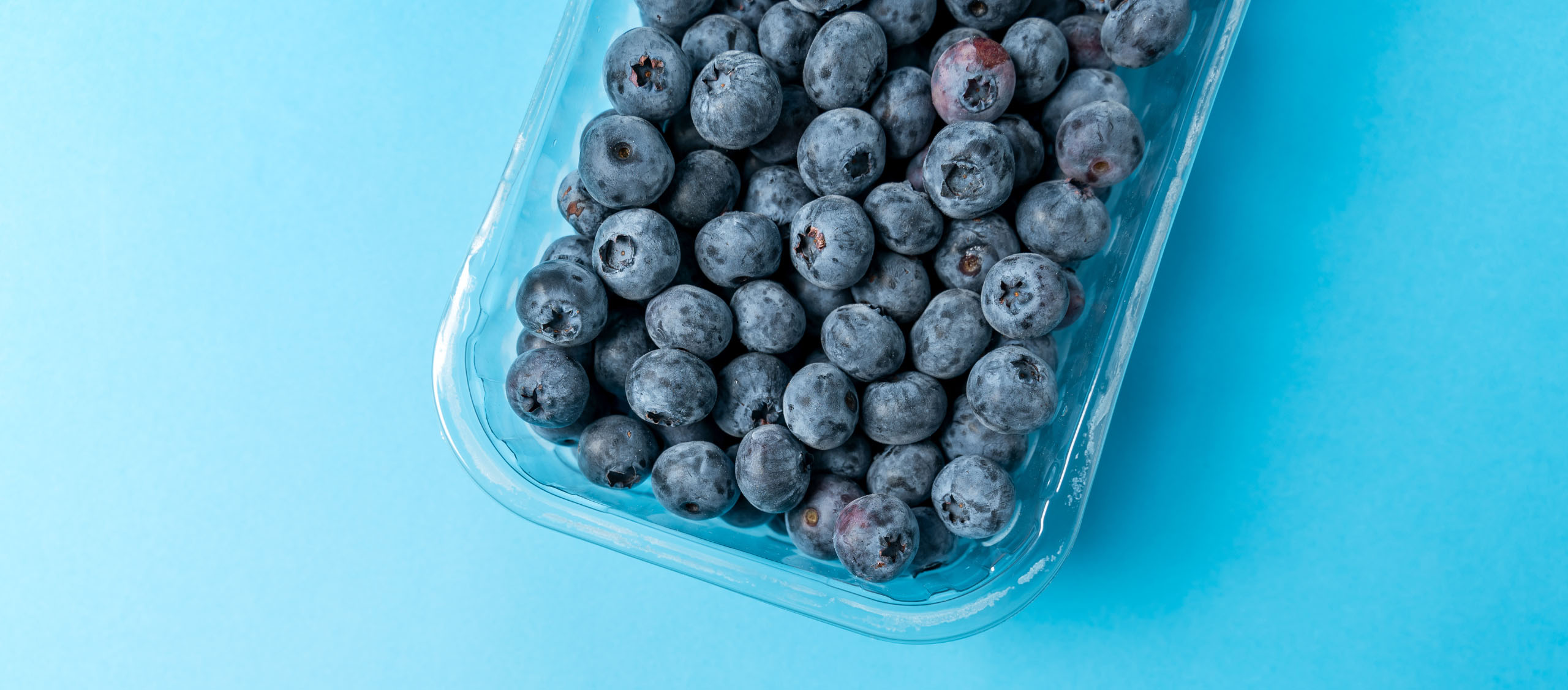
From the moment it’s cut, fresh produce starts breathing faster. That accelerated respiration starts a countdown timer on shelf life and presence, and for brands shipping items like fresh-cut lettuce, berries, or sliced apples, every day matters. The right packaging can manage the respiration rate and extend the life of these products.
The challenge is each product breathes differently depending on how it’s grown, when it’s harvested, and how it’s handled. With all these factors at play, the difference between a happy customer and a disappointed one lies in just a few microns. It’s in these almost invisible spaces where advanced respiration-controlled packaging with perforated lidding film becomes a critical tool in your packaging strategy.
The science of respiration control.
As fresh products continue to respire after harvest and processing, they consume oxygen and produce carbon dioxide. If, as part of this process, oxygen levels drop too low within the packaging, your product may start to spoil or taste off. On the flip side, if oxygen levels are too high, food can brown, soften, and encourage microbial growth.
What makes respiration control particularly challenging is that no two products breathe exactly alike. Research shows optimal oxygen levels for fresh produce typically falls between 1 to 5 percent, but the precise sweet spot depends on a number of different variables. At Belmark, we consider each of these variables as we develop a perforation pattern customized to your individual product.
Indoor versus outdoor growth can affect respiration. Products grown in controlled greenhouse environments breathe differently than field-grown varieties of the same crop.
Climate and weather patterns can vary from season to season and region to region. Produce grown in hot and dry conditions require different oxygen levels than those grown in a cool, wet climate.
Harvest timing matters a great deal as well. Even with all other factors being equal, a crop of berries harvested a few days later than the same variety of berries from the same grower can have measurably different respiration rates.
A precise approach to product preservation.
The packaging industry has long relied on existing databases compiled by universities and third parties to understand how different commodities breathe. Most packaging suppliers reference these databases to determine the perforation patterns they use with their lidding film. The issue is these databases are built on averages and fail to take into account all the variables outlined above.
When variables like growing season and environment, climate patterns, and harvest timing are overlooked, you could be leaving days of extended shelf presence on the table.
Instead of relying on generic databases, Belmark offers a proprietary next-generation respiration technology that gives brands greater control over the atmosphere inside the packaging with highly precise macro, micro, and nano perforations based on individualized product testing. It’s an innovative, tailored method that helps extend the shelf life of your specific product.
Packaging primer: lidding film versus clamshell.
Before we get into the details about how we approach lidding film and custom perforation at Belmark, it’s worth taking a look at why lidding film is a popular choice for fresh produce. While traditional plastic clamshells offer some protection and visibility, they can’t deliver the same level of atmospheric control as lidding film can. This means your product may spoil sooner. Additionally, lidding film uses 30-40% less plastic than clamshells.
Belmark’s respiration testing.
At Belmark, we use a patented Fast Respiration Meter® to measure how quickly your product consumes oxygen and produces carbon dioxide under controlled conditions.
Tailored oxygen flow.
Data gathered from Belmark’s exclusive respiration testing is used to create a custom ventilation profile. The profile outlines the exact number and size of perforations needed to work in tandem with a carefully selected base lidding film to deliver complete atmospheric control.
Laser perforation.
During production, our patented Laser Perforation System® creates holes up to 100+ microns and as small as 40 microns. The low end of this range is significantly smaller than the industry standard. For context, a typical microperf is the same diameter as a human hair and Belmark’s system creates holes one seventh that size.
Verified precision.
A patented closed-loop camera system exclusive to Belmark’s process analyzes each perforation in real time. Any inconsistencies trigger immediate adjustments, ensuring uniform perforation and performance across every package.
The measurable impact of precision perforation.
The business case for Belmark’s proprietary precision perforation lidding film extends beyond the general promise of product freshness. Brands using advanced modified atmosphere packaging find measurable operational and cost-saving benefits.
Extended distribution range.
Many growers and packers find their market reach limited by shelf life constraints. Optimizing packaging to extend the shelf life of a product by even two or three days can open new markets that were previously not accessible. In this way, the right packaging can unlock revenue growth opportunities.
Reduce supply chain waste.
Extending the shelf life of your product means it arrives at the store with more time to sell, so retailers experience less spoilage. Data has shown proper respiration control can reduce in-store waste by up to 50 percent. The longer shelf life also has the potential to reduce food waste for consumers who have more time to use your product.
Brand reputation.
Products that spoil prematurely can damage brand perception for individual consumers but also through reviews they leave. Additionally, retailers that deal with excessive returns or complaints on a particular product may choose to reduce inventory or stop carrying it altogether. Precision perforation ensures consistent performance to mitigate this risk.
Quality assurance confidence.
There is peace of mind in knowing every package leaving your facility meets specifications. No wondering, no guess work, no unforeseen problems. The closed-loop system protects product integrity at every step.
While industry averages and standard mechanical perforation get the product to market, brands may want to consider if there is a better way. Extended distribution range, reduced waste, protected brand reputation, and operational certainty all make the case for moving from generic solutions to a precision approach tailored to your product.
An expert partnership for precise perforation.
The variables influencing respiration control create an optimization challenge. Most brands don’t have in-house expertise in respiration science, laser perforation technology, or atmospheric control systems. That’s why it’s so important to work with the right packaging partner.
Our team at Belmark has the technical expertise paired with patented technology to take the guesswork out of your packaging decisions. As your partner, we can transform the challenges of product respiration into a competitive advantage.
FAQs on precision perforated lidding film.
Industry databases provide useful baselines, but your product isn’t average. Growing conditions, harvest timing, and handling processes create unique respiration characteristics. Testing may confirm industry averages, but it may also reveal opportunities to extend shelf life.
Standard perforation creates holes based on initial settings but doesn’t verify each one during production. Closed-loop systems verify every perforation as it’s made and adjusts instantly as necessary. The real-time verification ensures consistency regardless of film variations or other variables.
High-respiring fresh products — berries, leafy greens, sliced apples and other processed fruits and vegetables — see the most dramatic improvement. However, any product where a modified atmosphere impacts shelf life and quality can benefit from precision perforation.
One of the latest innovations in perforation technology is the introduction of nano-perforation. Significantly smaller than the industry standard of 65 micron, these holes enable even more precise atmospheric control. They’re particularly useful for extending shelf presence of the lowest respiring products on the market like romaine gems.
Share This Story, Choose Your Platform!
Ready to get started?
Ready to get started?
Call 920.280.1282 or fill out this form and you’ll be in touch with a packaging expert in under 24 hours.
Call 920.280.1282 or fill out this form and you’ll be in touch with a packaging expert in under 24 hours.