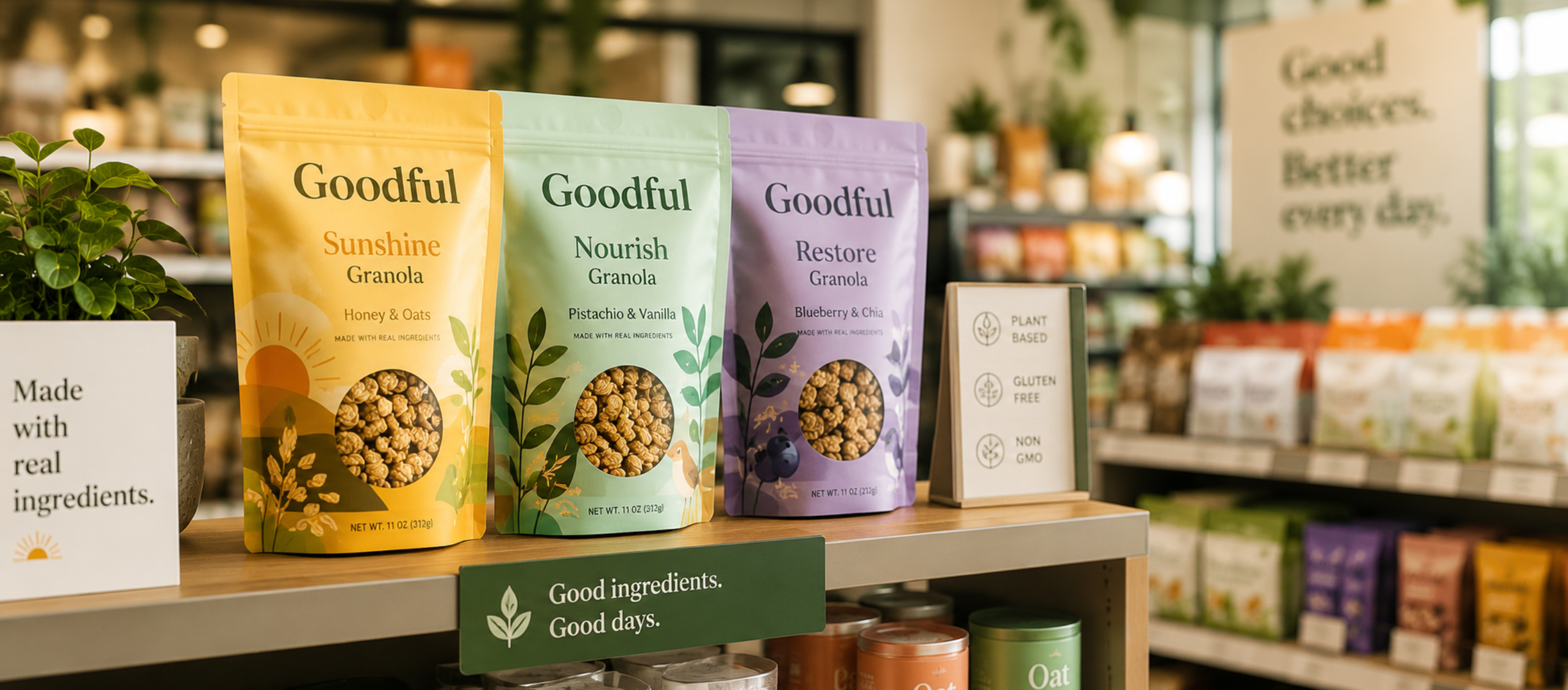
Getting your first purchase order from a major retailer is one thing. Getting your packaging ready for that shelf is another. What worked at the farmers market, or even in your online store, may not hold up in a retail environment where product gets handled, stacked, and shopped by strangers all day. Here’s what actually changes, and how to think through it.
What Changes When You Go Retail?
Direct-to-consumer and small-format retail are relatively forgiving environments. You control the context, including the table display, the way the customer interacts with your package, the sale itself, etc. Major retail is an entirely different ballgame, but comes with the opportunity for the growth you always dreamed of.
In a grocery or specialty store, your product competes without you there to advocate for it, but it gets a lot more foot traffic. For food products for example, shoppers spend 35 seconds looking at a food product before placing it in their basket. Your product sits alongside dozens of alternatives, gets handled by shoppers and stocked by store staff, and has seconds to communicate your brand story.
A few things shift meaningfully when you make the jump:
- Shelf presence becomes everything. Your packaging needs to command attention from several feet away, guide the eye to the right information, and hold up visually under retail lighting.
- Structural durability matters more. Products get stacked, moved, and handled by warehouse and retail staff before they ever reach a shopper. Packaging that looks great on a website needs to stay that way through the supply chain.
- Brand consistency gets scrutinized. Retailers and category managers are looking at your product next to your competitors. Inconsistent color or hard-to-stock sizing may stand out in a way you don’t want on the shelf.
- Compliance requirements are real. Most retailers have specific requirements around labeling, barcodes, and packaging formats. Understanding those requirements before you go to press saves everyone time.
What Retailers Actually Need From Your Packaging
Retail environments reward clarity, consistency, and durability:
- Clarity means your product communicates immediately: what it is, who it’s for, and why someone should choose it. The best retail-ready packaging doesn’t require the shopper to work for that information.
- Consistency means your packaging looks exactly the same from unit to unit, run to run. Color accuracy isn’t just a design preference, it’s a brand signal. If your color profile shifts between print runs, it chips away at the professional presentation you’ve worked to build.
- Durability means your packaging survives the journey. Pressure sensitive labels, flexible packaging, and folding cartons each perform differently depending on the product, the fill environment, and the retail channel. A good packaging partner will help you match the format to the demands of your specific situation.
Retailer compliance requirements – barcodes, label placement, shelf-ready formats – are worth understanding early. Not because they’re complicated, but because a missed barcode spec or labeling requirement discovered after production means reprints, delays, and a conversation with your buyer you don’t want to have.
Format Decisions – It’s Not Always One Answer
This is where a lot of brands get tripped up: assuming there’s one right answer for retail-ready packaging. There often isn’t.
Many brands run more than one format for different products, such as pressure sensitive labels on a bottle, flexible packaging for a pouch product, or folding cartons where more surface area or displays are needed. The format decision should follow the product, the retailer’s requirements, and the brand’s longer-term direction.
- Pressure sensitive labels are a strong entry point when your primary container already provides structure. They support premium finishes, are well-suited to market testing at smaller runs, and scale cleanly as volume grows.
- Flexible packaging such as stand-up pouches, flat pouches, and roll stock work well for products where the packaging itself provides containment, and offers a broad creative canvas for brand expression.
- Folding cartons add structure as secondary packaging. If your product needs to stand upright, communicate a lot of information, or be displayed on a shelf, a folding carton may be the right call.
Not sure which format fits your situation? That’s exactly the right question to bring to a packaging conversation. The answer depends on specifics that a good packaging consultant can walk you through.
You Don’t Have to Figure Out Scale Before You Call
One thing that holds brands back from starting the packaging conversation is the assumption that they need to arrive with a fully formed plan, including quantities locked, specs defined, and a timeline confirmed.
You don’t.
Belmark works with brands at every stage of that process, from “we just got the buyer call and don’t know where to start” to “we’re ready to scale from regional to national.” There are no order minimums, which means you can start where your business actually is, not where you think you need to be to qualify for a conversation.
The relationship doesn’t end with the first order. A dedicated team (including sales, engineering, and customer service) stays engaged as your business grows. That continuity matters when you’re expanding SKUs, refreshing packaging, or moving into new retail channels.
What to Bring to Your First Packaging Conversation
You don’t need a spec sheet. You do need a rough picture of your situation. Helpful things to have ready:
- The retailer’s requirements, if you have them. Many retailers publish these, and your buyer may have sent them along during your negotiation processes.
- Your current packaging, or a description of it: what format is it, and where does it feel like it might fall short in the new environment?
- Your timeline. When is your first ship date to the retailer?
- Your brand direction. Are you planning to refresh the design or maintain what you have?
- Questions you already have about materials, printing, or format.
That’s a starting point, not a checklist you have to complete before reaching out. A packaging consultant can help you fill in the gaps.
FAQs: Retail-Ready Packaging
Ready to Talk About Your Retail Packaging?
Your first major retail account is a milestone. Your packaging should be ready for it. Schedule a packaging consultation and let’s talk about what your next step looks like.
Share This Story, Choose Your Platform!
Ready to get started?
Ready to get started?
Call 920.280.1282 or fill out this form and you’ll be in touch with a packaging expert in under 24 hours.
Call 920.280.1282 or fill out this form and you’ll be in touch with a packaging expert in under 24 hours.