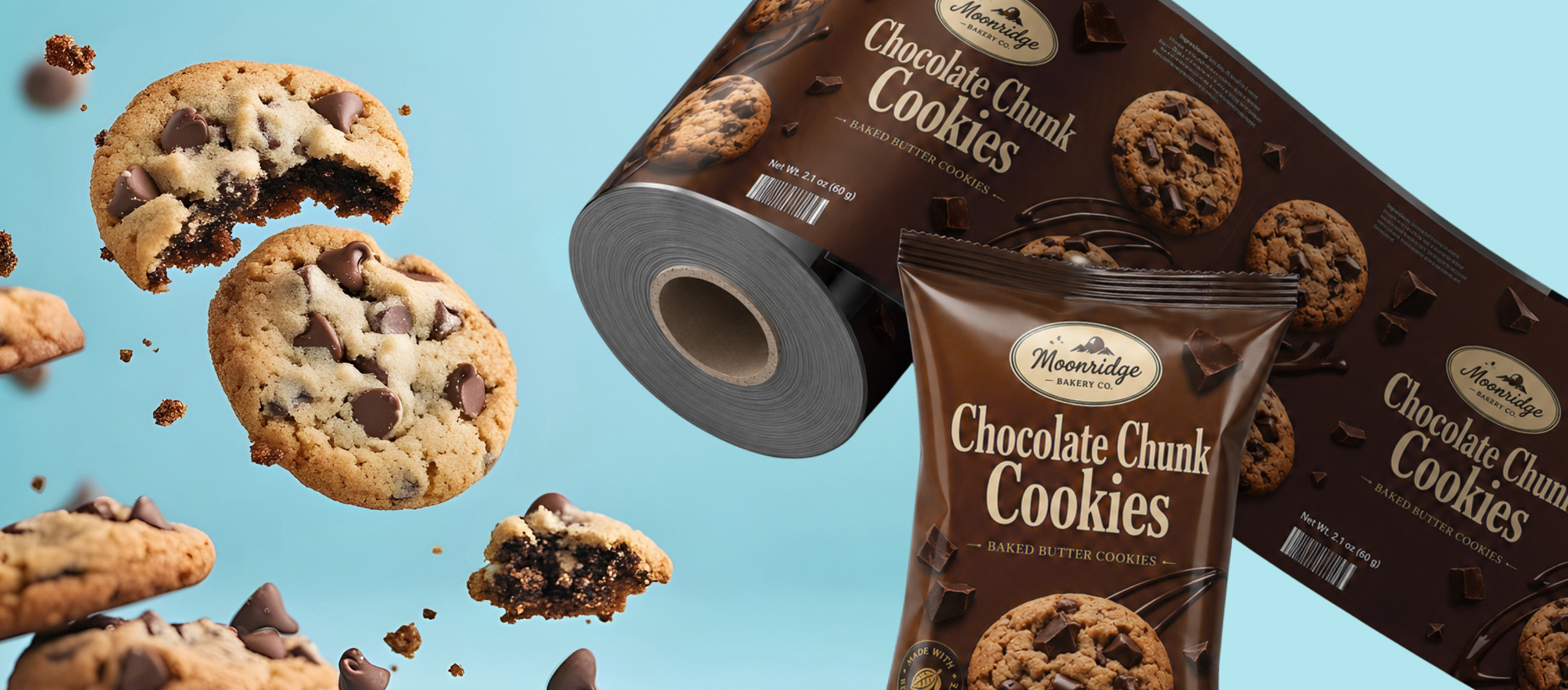
The choice between rollstock and pouches isn’t just about the package itself and how it shows up on the shelf (though that part is important too). You have to think about your filling line, launch timelines, and SKU maturity.
Pre-made pouches make it easy to test, launch, and iterate on new products — and thanks to high-speed rotary pouch equipment, plenty of large-volume brands run them as a permanent part of production, too. Rollstock is built to optimize output once a SKU’s volume, format, and specs are locked in. Both play a role in your packaging strategy. The key is finding the best fit for your brand and individual SKUs based on operational goals, SKU mix, and existing line infrastructure — not volume alone.
Watch where your line starts to strain.
Pre-made pouches arrive ready to fill. You can run them on manual or semi-automated lines, which keeps your operation nimble and your barrier to entry low.
Rollstock works differently. Built for speed and output, it feeds a roll of flexible packaging film through an aptly named Form-Fill-Seal (FFS) line that forms, fills, and seals each package in one continuous motion. It also requires specialized equipment, technical expertise, and changeovers.
Worth noting: pouches don’t cap out at small batches. High-speed rotary pouch fillers can exceed 100 pouches a minute — output that rivals many FFS lines. Brands running serious volume often stay on pouches because it fits how they operate: frequent SKU changeovers, co-packing multiple clients, or a premium format the product calls for.
So the question isn’t “which format is better?” It’s “which format fits how your line actually runs — your volume, your SKU mix, and how often you need to change over.” Jump to rollstock before your operation is ready for it, and you’ve committed to hardware your infrastructure hasn’t caught up to yet. Stay on manual pouch lines when a rotary pouch system could carry your volume just fine, and you’re leaving speed on the table.
One market strategy, two packaging approaches.
To break it down more clearly, the answer to “rollstock or pouch?” lies in your market strategy. For the better part of the last decade, McKinsey has argued the winning approach is to market-test new ideas at a smaller scale with lower up-front investment, saving the heavier investment for the scale-up. That’s why the smartest growing brands tend to test small and commit big only once demand is proven. Their packaging approaches have to be able to follow the same trajectory.
Stay nimble at the start.
Whether you’re launching a new flavor, testing a regional rollout, or responding to emerging trends, pre-made pouches help simplify the path from concept to shelf.
In this phase, it’s important to work with a packaging partner that offers low or no minimum order requirements. This allows brands to produce packaging on demand instead of overcommitting inventory. Whether it’s a seasonal flavor, regional pilot, influencer collaboration, or a new ready-to-eat launch, pre-made pouches make it easier to test the market before scaling production.
Pair pre-made pouches with digital printing, and you can swap artwork, localize claims, or spin up a new variant fast, keeping your strategy both nimble and impactful. (We dig deeper into that play in turning trends into SKUs that scale.)
Optimize efficiency as you grow.
When a product proves itself, the goal shifts from “get it on the shelf” to “keep it on the shelf, everywhere, consistently.” That’s rollstock territory. For brands moving into broader retail distribution, rollstock creates the operational foundation needed to support higher throughput and automated production workflows.
Once your volumes are steady and your SKUs are settled, rollstock becomes the efficient backbone of a high-volume operation, integrating naturally with automated weigh and fill systems.
But high volume alone doesn’t dictate the switch. Plenty of high-volume operations stay on premade pouches — especially co-packers juggling frequent changeovers or brands whose SKUs call for premium formats like zippers and stand-up doypacks. The real trigger is whether your changeover frequency and format needs still favor rollstock’s speed advantage over pouch flexibility.
Many brands worry about what this expanded production and the speed that comes with it means for the quality of their packaging. The good news is automation is made to deliver consistent quality at high speeds with uniform seals, fills and packages paired with visual repeatability across millions of units. It’s the kind of consistency the national retail programs, club store distribution, and e-commerce platforms you do business with as you scale all quietly demand.
It’s important to note, scaling into rollstock doesn’t mean leaving pouches behind. As product lines expand, many brands use rollstock for established SKUs while turning to pre-made pouches for regional tests, promotional runs, and emerging opportunities.
Brand alignment across formats.
Whatever format you run, your brand should always look like itself. A shopper shouldn’t be able to tell whether your packaging came off an FFS line or arrived pre-made. They should just recognize you.
In this way, the same consistency that protects your retail relationships as you scale also protects your consumer experience and brand reputation. Working with a single partner across both formats ensures everything from color to typography to finish remains on target.
The sustainability bonus.
A common misconception about both rollstock and pouch formats is that sustainability isn’t an option. That’s just one of many myths floating around about sustainable packaging. Both formats are available in eco-friendly options, including tru-IMPACT®, which uses post-consumer recycled content and recyclable eco-READY™ materials.
Moreover, flexible packaging offers clear efficiencies outside of which substrate you choose. It uses less raw material than rigid formats, reduces transportation weight, and maximizes shipping density.
Find the right format for the right moment.
The honest answer to “rollstock or pouches?” is usually “both — often at the same time.” Pre-made pouches let you launch, test, and learn without committing more than you need to. For many brands they stay part of the mix even after scaling, wherever changeover speed or format flexibility matters more than raw throughput.
Rollstock lets you lock in a proven, steady-volume SKU with the consistency bigger retail demands. The brands that grow well aren’t the ones who pick once. They’re the ones who keep matching the format to the moment — and the SKU.
Share This Story, Choose Your Platform!
Ready to get started?
Ready to get started?
Call 920.280.1282 or fill out this form and you’ll be in touch with a packaging expert in under 24 hours.
Call 920.280.1282 or fill out this form and you’ll be in touch with a packaging expert in under 24 hours.